PlusSmart · Authorised Flexaseal distributor – designed and made in the USA
Flexaseal mechanical seals – chosen for how the pump really runs, not just the nameplate
The seal is the most frequently failing pump component, and replacing it “like for like” without understanding why it failed means it will fail again. PlusSmart brings Flexaseal into the same conversation as vibration and operating data: when the problem is the seal, we specify the right seal and seal-support system; when the pump is being pushed into dry running or dead-heading, we fix the root cause with ReliaPump.
- Fully split cartridge seals
- Triple-ply metal bellows
- FlexICE™ coating
- OEM replacements
- API seal support
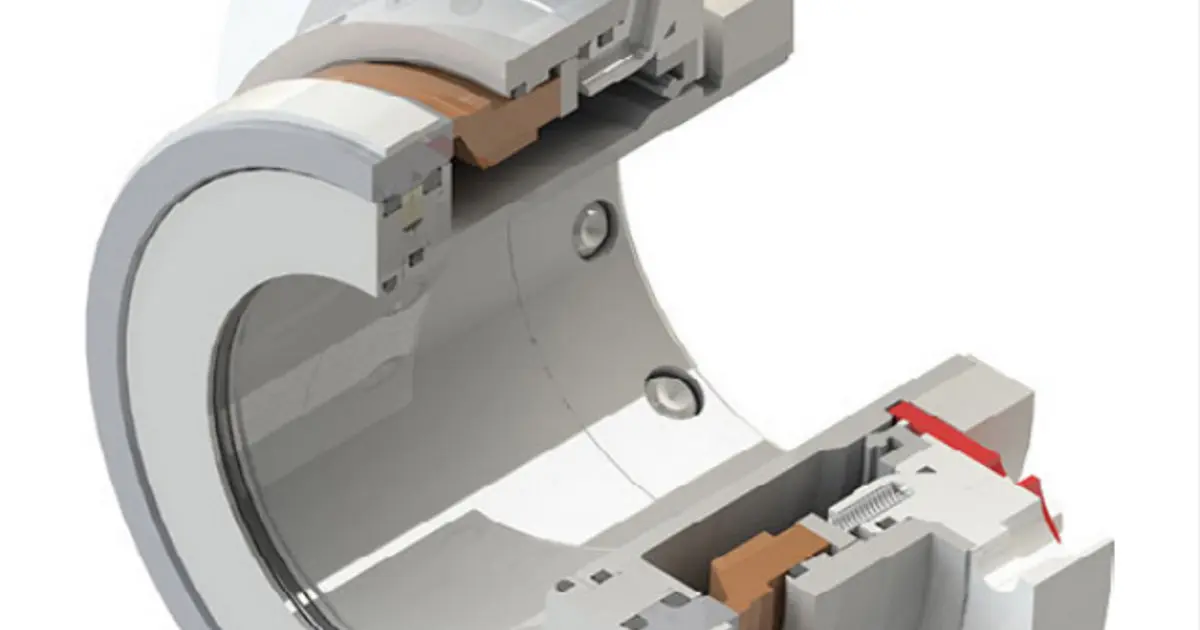
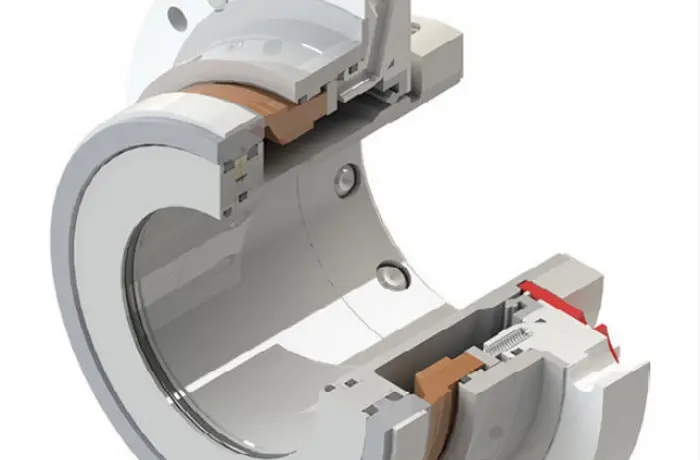
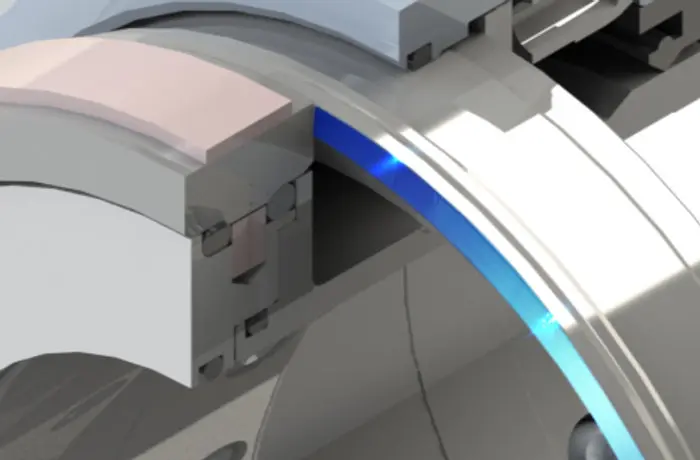
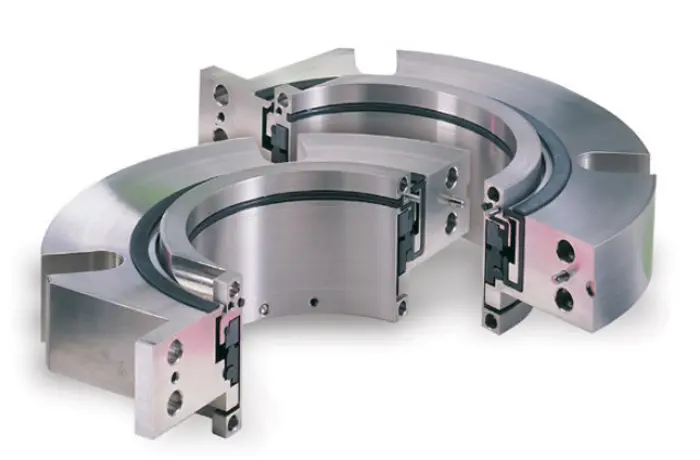
How a mechanical seal works
A mechanical seal has two lapped, extremely flat faces: one rotates with the shaft, the other is stationary in the pump casing. Springs or bellows press them together; between them a fluid film only micrometres thick both lubricates and seals. Anything that removes or disturbs this film – dry running, flashing at the faces, solids between the faces, shaft runout – causes wear, heat checking or leakage.
Read the failed seal to find the cause
| What you see on the old seal | Common cause | Remedy |
|---|---|---|
| Heat-checked, burnt faces, hardened elastomers | Dry running, dead-head, flashing at the faces | Dry-run/dead-head protection (ReliaPump), cooling or circulation, FlexICE faces |
| Uneven, off-centre wear track | Shaft runout, misalignment, high vibration, operation far from BEP | Align, monitor vibration (i-ALERT), return pump to its preferred region |
| Scored or grooved faces | Solids in the liquid (slurry, sand, scale) | Hard SiC/TC faces, double seals, clean flush per API plan |
| Crystals or deposits around the seal | Liquid crystallises when leaking to atmosphere | Quench (Plan 62), double seal with barrier fluid |
| Swollen or cracked O-rings | Elastomer incompatible with chemical or temperature | Change elastomer (FKM, FFKM, EPDM…) or use metal bellows |
Seal support systems per API 682
| Plan | Arrangement | When to use |
|---|---|---|
| Plan 11 | Recirculation from discharge through an orifice to the seal chamber | Clean liquids, moderate temperature – most common |
| Plan 21 / 23 | As Plan 11 via a cooler (23: closed loop with cooler) | Hot liquids, boiler feed water |
| Plan 32 | Clean flush injected from an external source | Dirty liquids with solids |
| Plan 52 / 53A | Dual seals with unpressurised (52) or pressurised (53A) buffer/barrier reservoir | Toxic or flammable liquids that must not leak |
| Plan 62 | External steam or water quench | Crystallising, solidifying or coking liquids |
Flexaseal technologies
Fully split cartridge seals
Flexaseal pioneered the fully split cartridge seal, including dual versions.
- Replace without dismantling the pump or pulling the shaft
- Large-shaft water and turbine pumps
- Mining tailings pumps
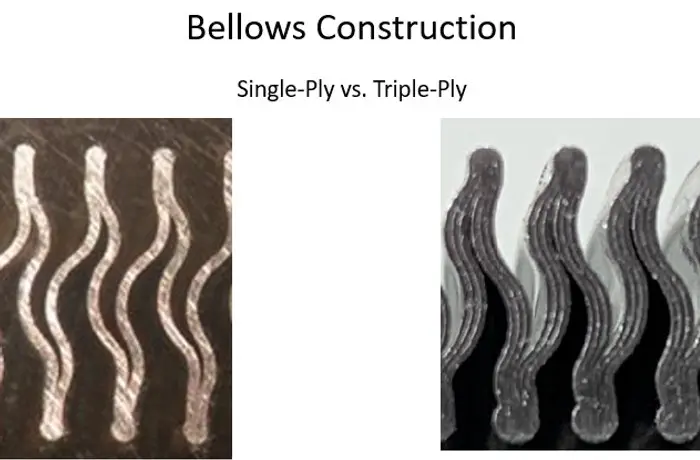
Triple-ply metal bellows
Superior axial and radial strength for very high temperature and extreme pressure.
- Rated above 100,000 kPa
- No dynamic elastomers – suited to high temperature
- Geothermal, coal-fired boiler feed pumps
FlexICE™ diamond-like coating
Low-temperature (~160 °C) PA-CVD diamond-like carbon that bonds to most materials including tungsten carbide.
- Extremely durable under high differential pressure
- Survives dry running and poor lubrication longer
- Boiler feed, high-pressure slurry, dewatering
Standard and engineered seals
From general water pumps to severe rotating equipment – each application reviewed for its actual duty.
OEM replacement seals
Equivalent to pump-maker originals, better availability and technical support; dimensions confirmed before quotation.
Seal support and repair
Reservoirs, circulation pumps and coolers per API plans; repair and refurbishment via Flexaseal Australia.
Frequently asked questions
Can Flexaseal replace the OEM seal of our current pump?
Yes. Flexaseal has an OEM replacement range; PlusSmart confirms dimensions and conditions before quoting.
Why does a new seal fail within months?
Usually dry running, dead-heading, cavitation or the wrong face material for the liquid and temperature. Fix the cause (ReliaPump, alignment) alongside choosing the right seal.
Do split seals seal as well as solid seals?
Flexaseal leads in split-seal ease of installation and reliability, used on large-shaft pumps, water and tailings duties; selection depends on the specific duty.
What information is needed to select a seal?
Pump model, shaft diameter, liquid (composition, solids), temperature, seal-chamber pressure, speed, current seal type and a description of failures – with photos of the old seal if possible.
Works with
- ReliaPump™ – eliminate dry running and dead-heading in the control
- i-ALERT® – track vibration that destroys seals
- PlusSmart Analytics – find repeat seal-failure pumps
Send your list of repeat seal failures
Include operating conditions: liquid, temperature, pressure, speed, pump type. PlusSmart reviews them with operating data and proposes trial seals for one or two of the hardest-working pumps – with an analysis of why the old seals failed.
Hoan Tran – Sales Director, PlusSmart Vietnam
Phone/Zalo: +84 879 848 668 · Email: sales@hoantrantdh.com